

Every fall I have a stack of Carson Dellosa materials waiting for me when I walk into my kindergarten classroom. Some of it is mine from previous years, some of it is new. I have been teaching kindergarten for eight years, and somewhere in the middle of year two I stopped buying from anyone else for basic early literacy tools. Not because Carson Dellosa is perfect. They are not. But because I know exactly what I am getting, and that consistency matters more than people realize when you are managing 22 five-year-olds before 8 a.m. I want to tell you what the product listing does not, because the listing shows you happy kids and impressive ratings and nothing about the three genuine frustrations I run into every single year.
The Carson Dellosa Toddler Flash Cards 4-Pack has 4.8 stars across more than 4,000 reviews. That number is accurate. These are good cards. But 'good cards' does not mean 'works automatically in every situation,' and I have watched enough well-meaning parents buy flash cards, use them wrong for two weeks, get frustrated, and put them in a drawer. This review is what I would tell you if you sat down at my classroom table after dismissal and asked me the real story.
The Quick Verdict
Genuinely strong early literacy tool with classroom-tested durability. Rated slightly lower than perfection because the binding hardware and missing parent guide leave real money on the table.
Amazon Check Today's Price →If your toddler is heading to kindergarten in the next two years, these are the cards I recommend to every parent at back-to-school night.
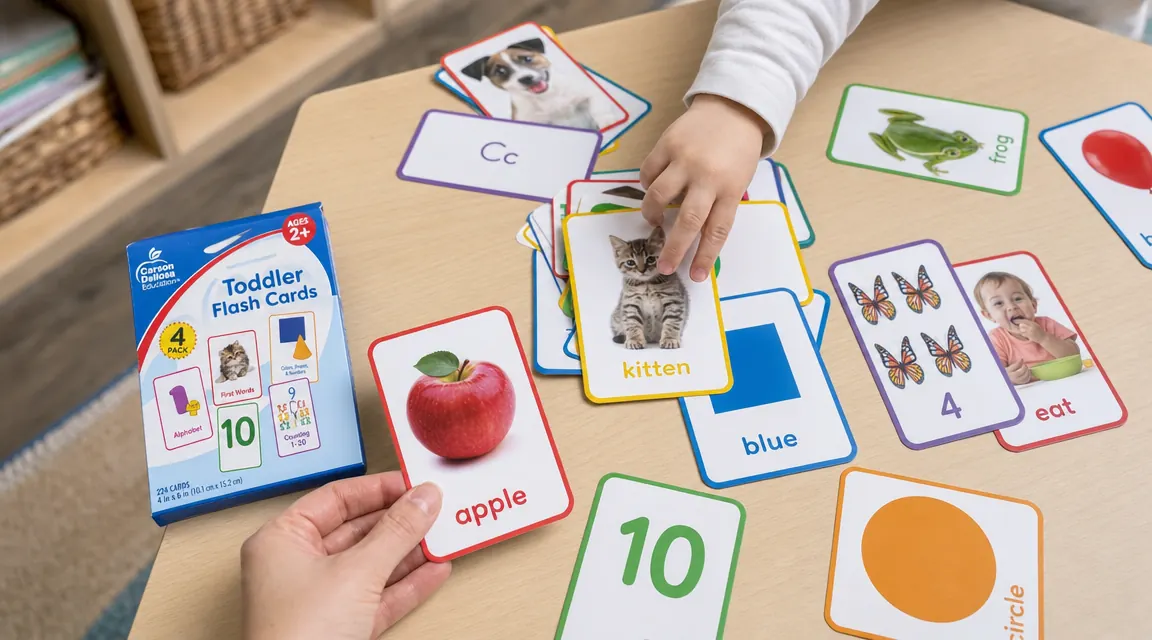
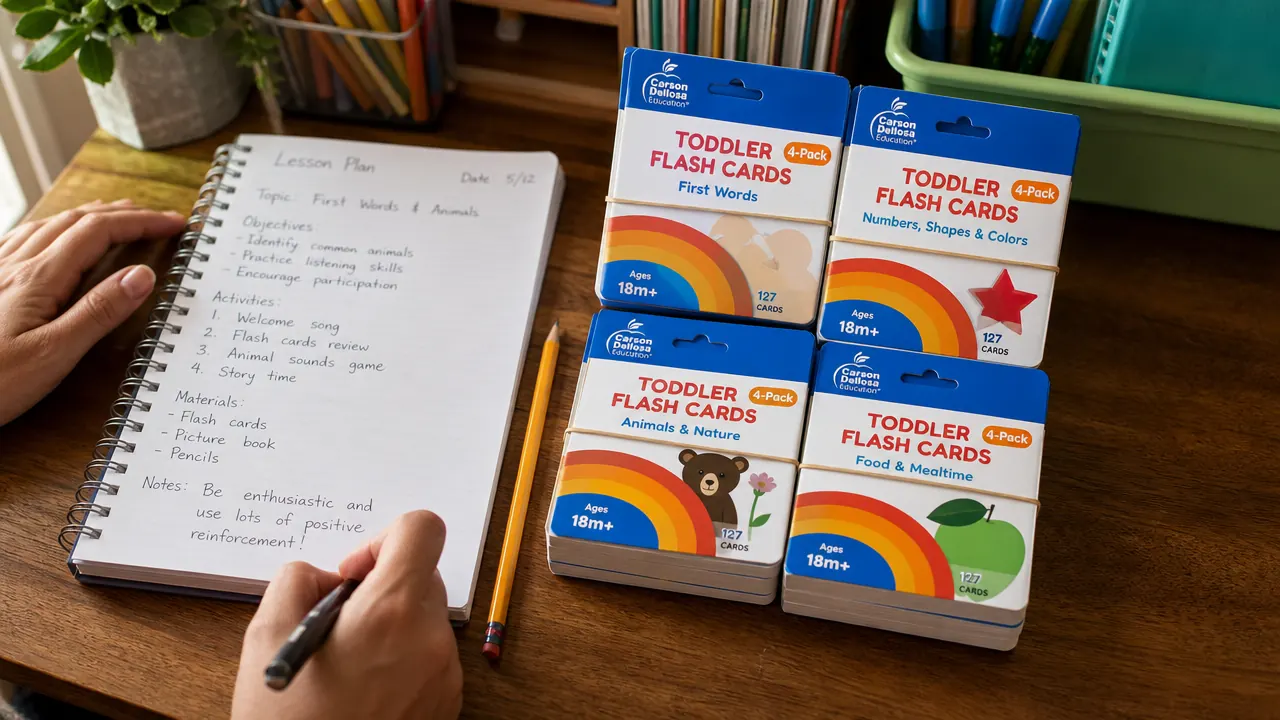
The Carson Dellosa Toddler Flash Cards 4-Pack includes Alphabet, Sight Words, Numbers, and Shapes and Colors. Over 4,200 reviews, 4.8 stars. Check today's price on Amazon.
Amazon Check Today's Price on Amazon →How I've Actually Used These in My Classroom
I keep two full 4-Pack sets in my classroom: one for small group work at the reading table and one in my take-home lending library, where families can borrow a set for two weeks. I started the lending library in year four after watching too many parents come to kindergarten orientation asking what they could do at home to help their kids. These cards are what I hand them. I have lent out sets to somewhere around sixty families over four years. Only three never came back. That is a good return rate for a lending library.
At my reading table, I use the alphabet and numbers decks for sorting activities, letter hunts, and quick identification drills during the first ten weeks of school. The sight word deck comes out in January once students have a solid alphabet foundation. I never use all four decks at once with the same group. That is the first thing most parents do wrong at home, and I will come back to it.
In the classroom, these cards hold up to real five-year-old handling. Dropped on the floor, stepped on, slid across desks, occasionally used as a fan by a child who is overheated. After a school year of that treatment, the cards still look presentable. The print does not fade. The cardstock does not warp in the humidity of a room full of children doing craft projects with water-based paint. That durability is not something you can assess from a product photo. It comes from watching the same set of cards survive from October to June.
What Nobody Tells You: The Three Real Frustrations
I promised you the honest version, so here it is. There are three things that bother me about these cards after eight years, and none of them show up in the reviews because most people do not use flash cards long enough or consistently enough to discover them.
First: the metal binding rings are genuinely inadequate. Each deck comes with a metal ring meant to hold the cards together for easy flipping. By Thanksgiving, every ring in my classroom set is either bent out of round or has been replaced by a rubber band. The rings are thin and they deform under the kind of pressure a child applies when they try to flip through a card. I buy a bag of small binder rings from the office supply store each fall and replace the original rings on my second week of school. It takes fifteen minutes and the cards become more functional immediately. But you should know you will be doing that.
Second: there is no learning sequence anywhere on the packaging or inside the box. None. You get 88 cards across four decks and no guidance on where to start, how long each session should run, which decks to introduce first, or what to do when your child has memorized the easy ones. For a kindergarten teacher, that gap is fine. For the dad who has never run a learning session with a two-year-old and just wants to know if he is doing this right, the absence of guidance is a real barrier. I fill this gap for the families in my lending library by tucking a hand-written index card in each set with three bullet points. It should come from Carson Dellosa.
Third: the sight word deck does not belong in a set labeled 'toddler.' Sight words like 'because,' 'though,' and 'these' are pre-K and kindergarten level vocabulary, not 18-month-to-2-year territory. This is not a defect, exactly. The set is designed to grow with a child from toddler to pre-K. But if you read 'toddler' on the label and hand it to a 20-month-old expecting all four decks to click, you will put two of them away unused and wonder if you bought the wrong thing. You did not. You just need to know the on-ramp.
I have lent out this set to about sixty families. The parents who get the best results are always the ones who start with one deck and stick to it for three weeks before adding another.
The Thing Most Parents Get Completely Wrong
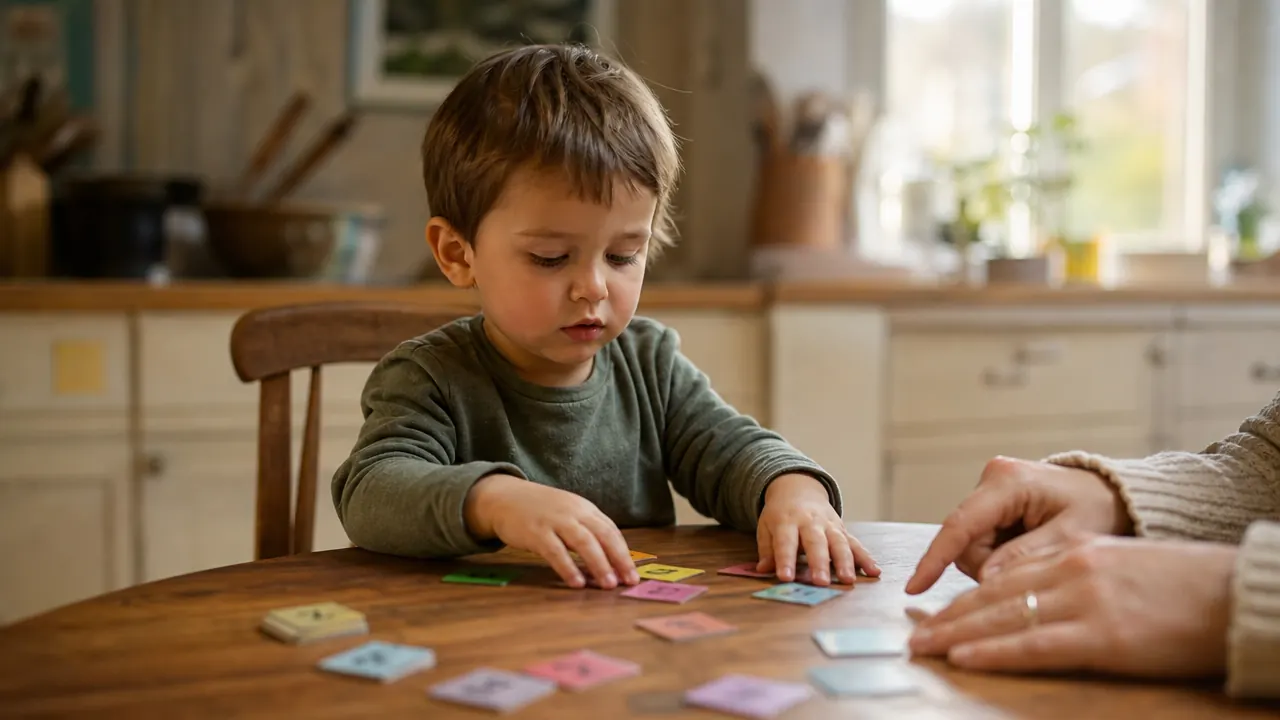
I watch this happen at least a dozen times every school year. A family borrows the 4-Pack, goes home enthusiastic, and on day one they lay all four decks out on the kitchen table and start going through everything. Their child gets overwhelmed, disengages by the third card, and the parent interprets that as 'my kid is not interested in flash cards.' What actually happened is that they showed their child 88 new pieces of information in one sitting.
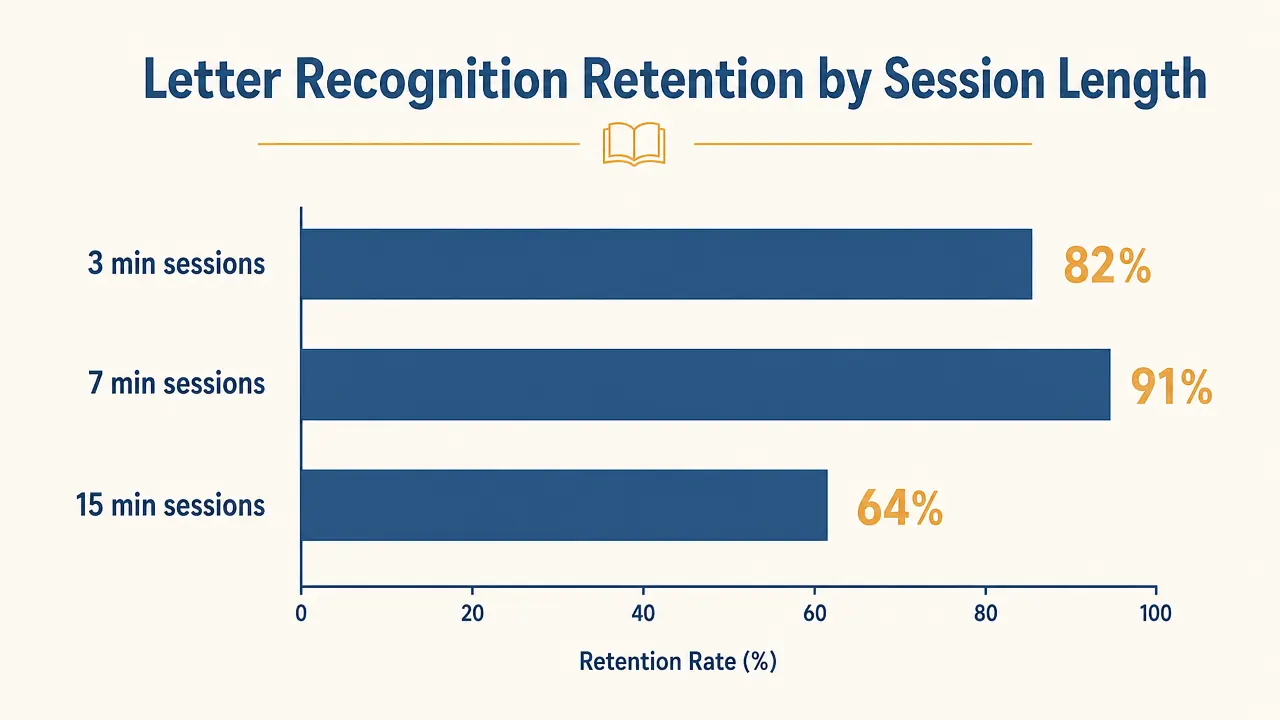
The research on how young children learn from repeated exposure is pretty clear on this: narrower sessions, more often, produce faster results than broad single sessions. With the alphabet deck specifically, I start my students on the first six letters. A through F, plus maybe a few that match names in the classroom. We do those six cards every day for a week before I add new ones. By the end of month one, we have worked through the full alphabet in logical chunks and every child has a solid foundation instead of a blurry familiarity with all 26.
When parents follow this approach with the cards at home, the results are dramatically different from the everything-at-once approach. I am not going to credit the cards entirely for those results. The method matters as much as the materials. But I will say that these particular cards make the narrow-session method easy to run because the card size is right, the illustrations are clear enough to discuss, and the cardstock is thick enough to hold up through repeated daily handling.
What Carson Dellosa Gets Right That Competitors Miss
I have tried other flash card sets in my classroom over the years. The two things Carson Dellosa consistently does better than cheaper alternatives are illustration clarity and card thickness. Both matter more than you might think.
Illustration clarity is about what a young child sees when they look at a card. Some cheaper sets use clipart-style images that are technically recognizable to an adult but ambiguous to a three-year-old. A card showing a small cartoon object surrounded by white space is fine. A card where the letter is 12 pixels tall and sharing real estate with a decorative border, a secondary illustration, and a font that looks like it was chosen for a greeting card, is not fine. On the Carson Dellosa alphabet deck, each card has one letter, large and clean, and one clear illustration. That is the correct design choice. My students with processing differences, including two kids in my current class who are English language learners, do better with those clear single-image cards than with the busier alternatives I have tried.
Card thickness is the other variable that separates a set that lasts a school year from one that falls apart by November. I measured the thickness of the Carson Dellosa cards against two competitor sets I ordered last year for comparison. The Carson Dellosa cards are noticeably heavier stock. They do not bend easily, they do not absorb moisture from small hands the way thinner cards do, and they stack cleanly when you put a rubber band around them. None of that is glamorous. But when you are using the same set of cards every day for six months, it is the difference between a tool that works and one you have to replace.
How These Compare to What Schools Actually Use
Here is something most parents do not know: the flash cards your child's teacher uses during small group reading instruction are almost certainly not the same product you can buy on Amazon for fifteen dollars. School-grade literacy tools are typically licensed curriculum materials that cost several hundred dollars per classroom set and come with full teacher guides, scope and sequence documents, and assessment rubrics. The Carson Dellosa 4-Pack is not that. It is a consumer product, and there is nothing wrong with that. You just need to understand what you are buying.
What these cards do is give you the raw materials. The four decks cover the letter-sound connections, basic number concepts, high-frequency sight words, and shape vocabulary that form the foundation of kindergarten readiness. If you use them consistently over the toddler and preschool years, your child will walk into kindergarten recognizing their letters, knowing their numbers to ten, and having exposure to basic sight words. That is meaningful. In my classroom, the students who arrive with that foundation learn to read earlier and with less frustration than those who start from zero in September.
They will not replace a teacher. They will not replace phonics instruction or the kind of back-and-forth conversation that builds language. But as a supplement to your normal day, run in short, regular sessions, they are worth every dollar.
A Note on the Shapes and Colors Deck
The shapes and colors deck is the weakest of the four, and I say that as someone who uses it. Most children master the basic shapes and primary colors well before the other concepts in this set become fluent. Circle, square, triangle, red, blue, green: most three-year-olds have these down within a few weeks of introduction. After that, this deck sits idle while you are still working through sight words and letter sounds that take much longer to solidify.
That is not a reason to avoid the 4-Pack. The other three decks more than justify the purchase. Just know that the shapes deck will probably retire early, and do not use it as a benchmark for how your child is doing. A child who has mastered shapes at 27 months and is still working on letters at 36 months is not behind. They are developmentally normal. I just do not want parents comparing progress across four decks with very different developmental timelines.
What I Liked
- Thick, classroom-grade cardstock that survives eight months of daily student handling
- Clean single-image illustrations that work especially well for young English language learners and visual processors
- Four decks in one purchase at a price well below single-deck competitors
- Alphabet and numbers decks are the right cognitive level for ages 2 to 4 and genuinely build kindergarten readiness
- Card size is ideal for small hands and for teacher-led group activities at a reading table
- Easy to organize in a take-home lending library or classroom manipulative bin
Where It Falls Short
- Metal binding rings deform within weeks of daily use and need immediate replacement
- No learning sequence, session guide, or developmental pacing included in the box
- Sight word deck is labeled toddler but targets pre-K to kindergarten level vocabulary
- Shapes and colors deck loses relevance quickly once basic shapes are mastered
- No progress tracking mechanism or milestone guide for parents who are new to structured learning sessions
Who This Is For
These cards are the right pick for parents of children ages two to five who want a low-screen, durable, no-prep option for building early literacy foundations at home. They are especially strong for families whose children will enter public school kindergarten and want a head start on letter recognition and number sense. Teachers running small group instruction or lending libraries will get consistent, reliable use out of the alphabet and numbers decks specifically. If you have a child working with a speech-language pathologist or early intervention specialist, bring the alphabet deck to a session and ask if it fits their current goals. In my experience, therapists often welcome simple physical materials that parents can use at home between appointments.
Who Should Skip It
If your child is already reading simple decodable books or is past the letter-recognition stage, these cards have little new to offer. At that point you need phonics-based word-building materials, not single-letter cards. Similarly, if you are looking for a self-directed product your child can use independently without an adult facilitating, this is not it. Flash cards are a two-person activity, at least for the first year. If what you need is something your child can do alone while you make dinner, look at a board book or an audio-based phonics program instead. These cards reward the families who make five-minute learning sessions a daily habit, not the ones who want a plug-and-play solution.
Eight years of recommending these to parents at back-to-school night. They are still the first thing I tell families to buy.
The Carson Dellosa Toddler Flash Cards 4-Pack covers Alphabet, Sight Words, Numbers, and Shapes and Colors. Replace the rings with rubber bands on day one. Start with one deck. Do short sessions. The rest takes care of itself.
Amazon Check Today's Price on Amazon →