
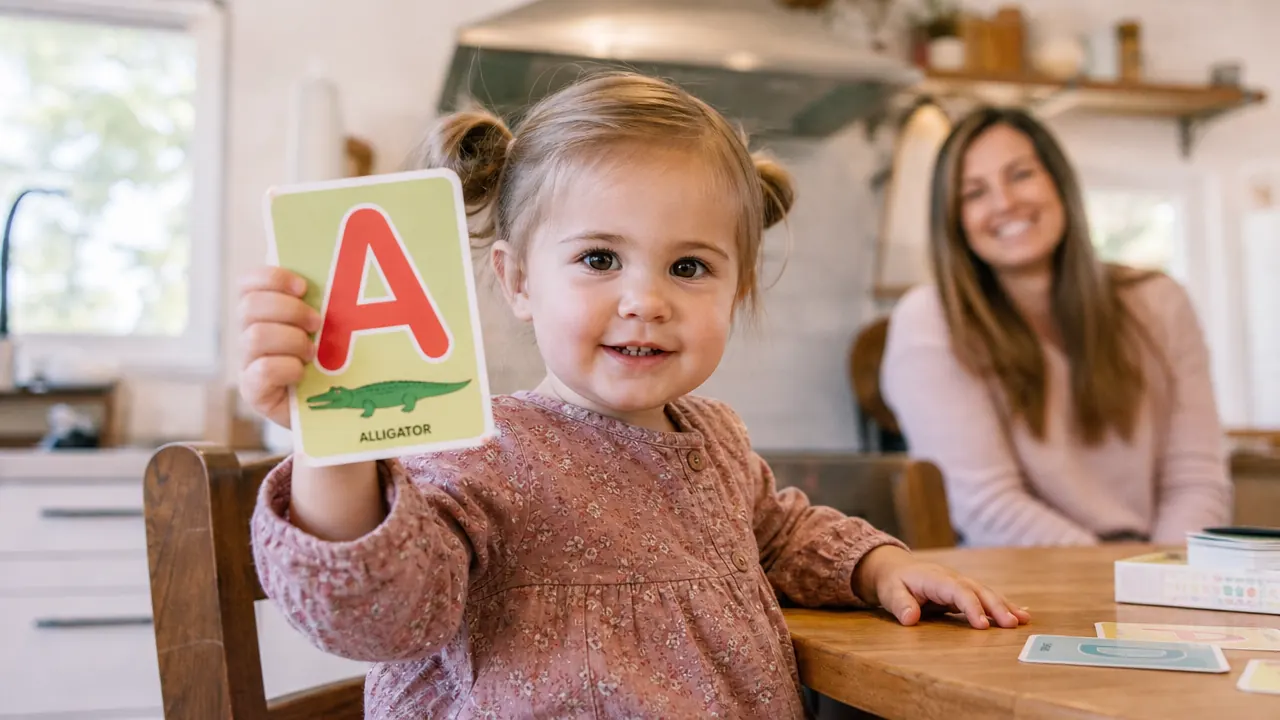
I have been a third-grade public school teacher for eleven years, and I am also the mom of a two-year-old named Mia and a four-year-old named Leo. So when it comes to early learning, I am testing things on two fronts at once. Last fall I sat on our kitchen floor with Mia and a set of Carson Dellosa Toddler Flash Cards, and within six weeks she had a working vocabulary of over 40 words, including all her basic numbers and a solid chunk of the alphabet. Meanwhile, three different learning apps I had tried with her over the previous six months had produced almost nothing. I want to tell you why that happened.
Parents are flooded with app recommendations. Colorful screens, cheerful sounds, automatic progression. It all looks so modern and convenient. But the research on toddler language development, and my own experience both as a classroom teacher and a parent, keeps pointing back to the same low-tech tool: a good set of physical flash cards. Here are ten reasons why.
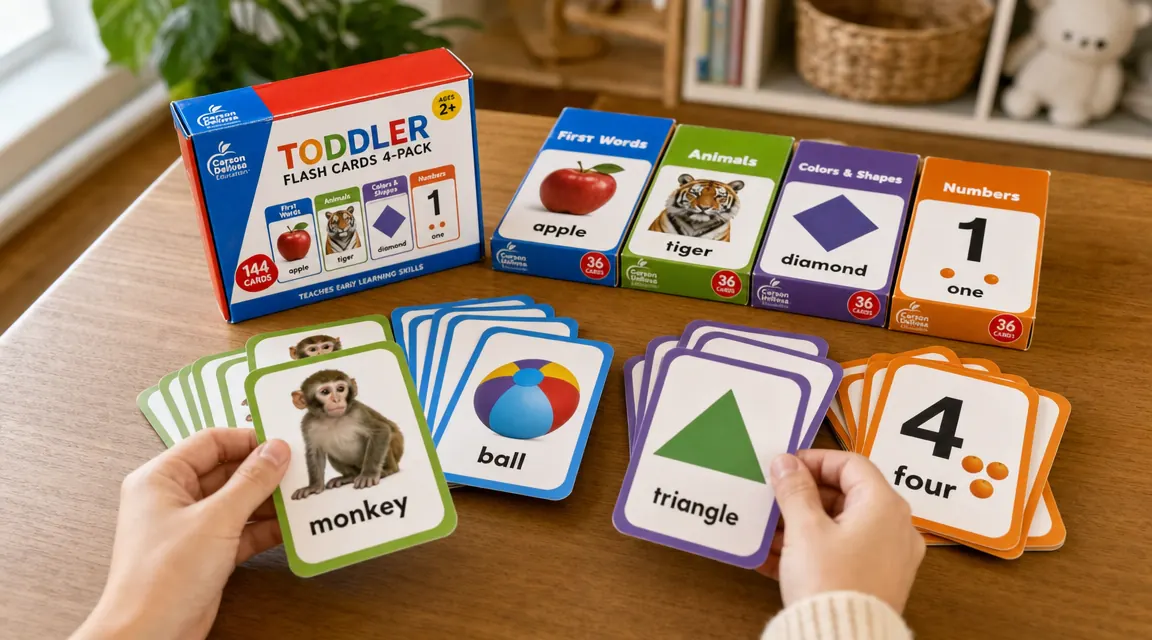
Your toddler's vocabulary can grow faster than you think. Here is the set I use.
The Carson Dellosa Toddler Flash Cards 4-Pack includes alphabet, numbers, sight words, and learning cards in one bundle. Rated 4.8 stars by more than 4,000 parents. It is the set I started with for Mia and the one I recommend to every parent who asks me.
Amazon Check Today's Price on Amazon →Physical Cards Force Focused Attention
When you hold up a card, your toddler has one thing to look at. There are no animations sliding in from the side, no sound effects competing for attention, no next video auto-loading. That narrow focus is exactly what a developing brain needs to encode a new word. With Mia, I noticed she would lock eyes on the card and hold that gaze for three or four full seconds. That does not happen with a screen. Early childhood research consistently shows that sustained, undistracted attention is the single strongest predictor of word retention at this age.
You Are the Teacher, Not the App
The most powerful learning tool a toddler has is a responsive, engaged adult. When you hold up a card and say the word, watch your child's face, repeat it in a silly voice, and celebrate when they get it, you are doing something no algorithm can replicate. Apps give kids a passive experience. Flash cards make the session a conversation between the two of you. That back-and-forth is what language acquisition researchers call 'serve and return,' and it is irreplaceable.
Tactile Learning Strengthens Memory
Toddlers learn with their whole bodies. When Mia picks up a flash card, turns it over, traces the number printed on it, and then hands it back to me, she is encoding that concept through touch, movement, and vision all at once. Multisensory learning creates stronger memory traces than screen-only input. The Carson Dellosa cards are printed on thick, durable card stock that holds up to exactly this kind of handling.
Sessions Stay Short and Effective
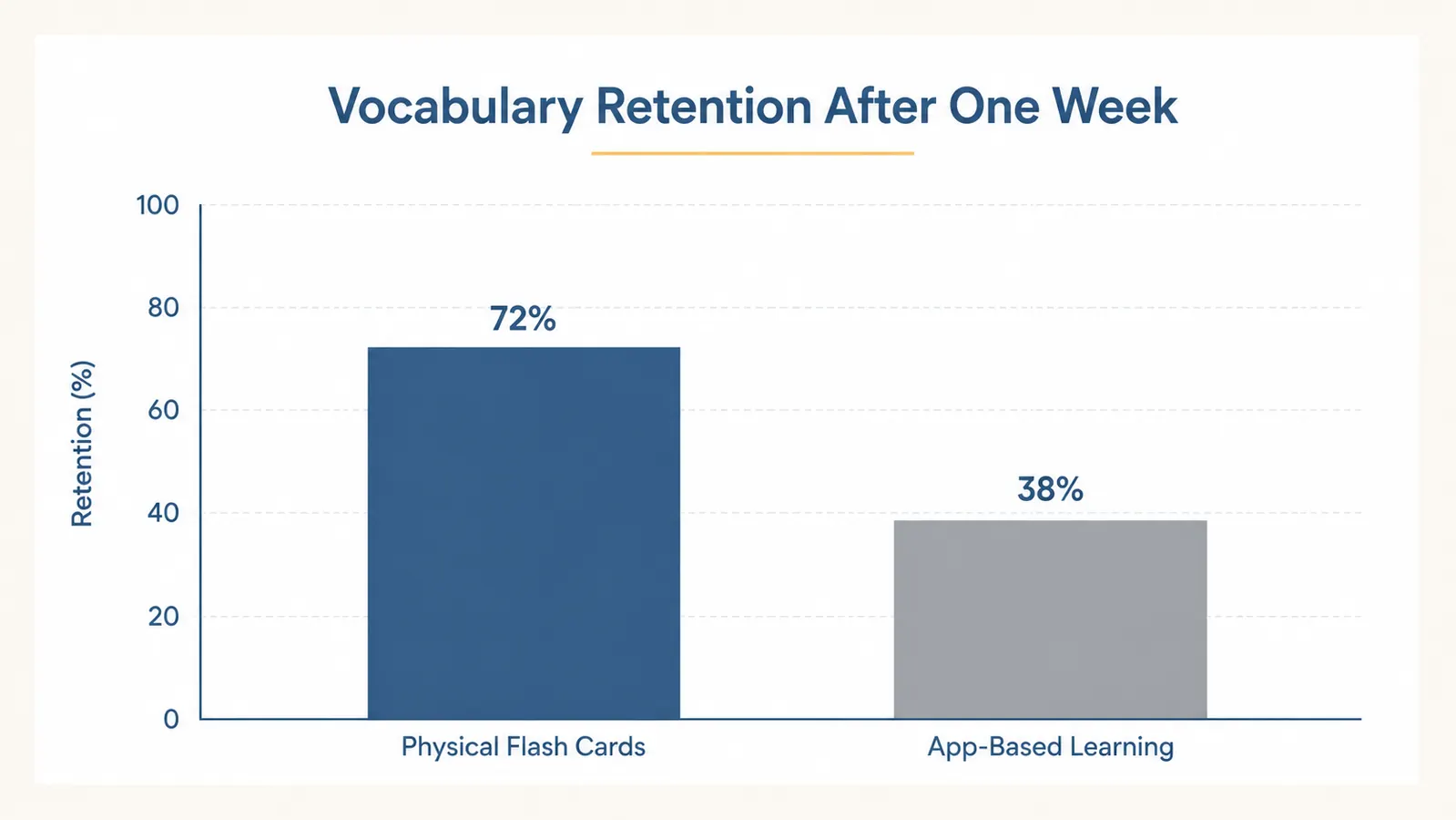
Toddler attention spans are short on purpose. Five to seven minutes of focused flash card practice is all you need, and it is easy to stop at that point when you are holding physical cards. With an app, five minutes turns into twenty because the app is designed to keep kids engaged indefinitely. Short, consistent sessions with flash cards beat long, wandering screen sessions every time for vocabulary acquisition at this age.
You Control the Curriculum
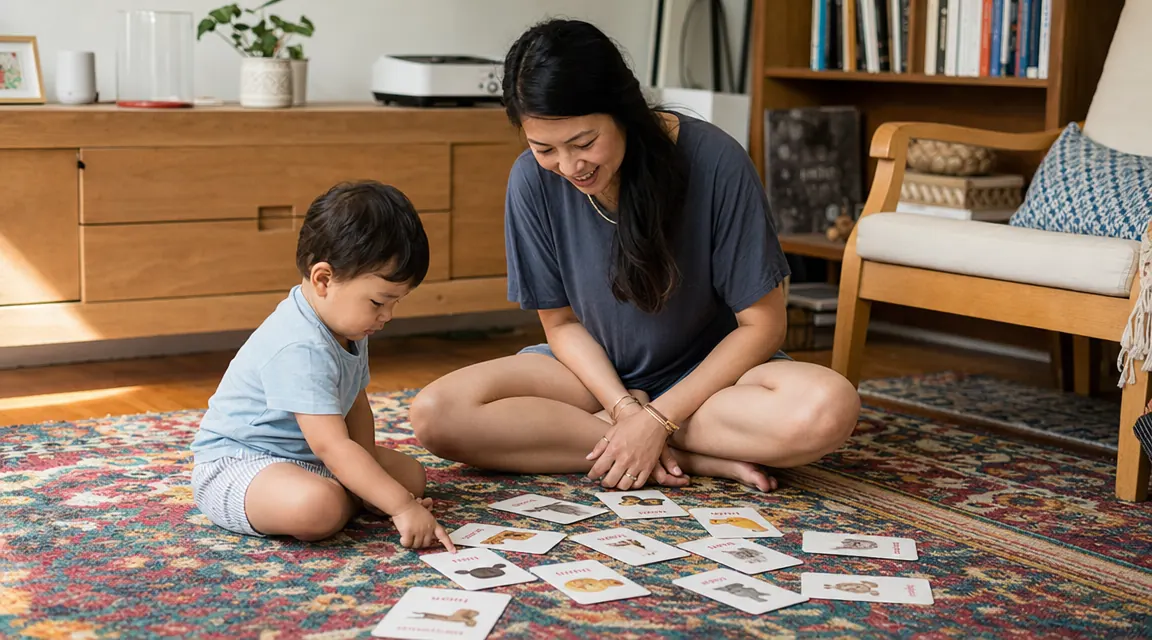
With a deck of cards in your hand, you decide what gets taught today. You can pull out just the letters in your child's name. You can focus on numbers one through five before moving to ten. You can repeat last Tuesday's hard words before introducing new ones. Apps make those decisions for you based on an algorithm that does not know your kid. That parent-controlled pacing is a huge advantage, especially for kids who need a slower ramp-up on certain concepts.
No Battery, No Wifi, No Tantrum When It Dies
This one sounds small until it is your toddler melting down because the tablet died mid-session. Flash cards go everywhere and work everywhere. We use ours on long drives (I hold them up from the front seat), in waiting rooms, at grandma's house with no wifi. The Carson Dellosa set comes with a handy ring that keeps each deck organized, so the cards do not scatter in the diaper bag.
They Support Speech Development Differently Than Screens
Speech language pathologists routinely recommend limiting passive screen time for toddlers specifically because screens do not require the child to produce language, only to receive it. Flash cards flip that dynamic. You hold up a card, you wait, and your child is invited to say the word. That expectation of verbal output is a crucial part of language development. I have seen this play out in my own classroom when working with students who came in as quieter communicators.
The Repetition Is Easy to Manage
Learning requires repetition, and with flash cards you can repeat a card ten times in a row without it feeling like a glitch. You can put the hard cards in one pile and cycle through them more often. You can hide the easy ones for a few days to keep sessions fresh. This kind of manual sorting and cycling is more effective than auto-repetition algorithms because you are basing it on what you observe in your child's face and voice, not on a timer.
They Transfer to Real-World Recognition Faster
About four weeks into using our Carson Dellosa alphabet cards, Mia started pointing to letters on cereal boxes and street signs. That transfer from cards to real-world print happened much faster than it did with my older son Leo, who used an app for his early letter learning. I believe the reason is that flash cards use static print, the same kind of print children encounter in the real world, rather than animated digital characters. The brain recognizes what it has practiced.
The Value Is Unmatched at This Price Point
The Carson Dellosa 4-Pack covers alphabet, numbers, sight words, and additional learning concepts in one bundle. For the current price on Amazon, that is four complete learning decks with hundreds of cards total. Most learning apps with comparable content charge monthly subscriptions that add up fast. You buy these cards once, and you can use them with multiple children over multiple years. My older son Leo still pulls out the sight word deck to practice. The whole-family value here is real.
What I Would Skip
Not every flash card set is worth your money. I would skip anything printed on thin cardboard that curls after one use, anything with illustrations so complex that a toddler cannot identify what they are looking at, and any set that tries to cover too many topics in a single deck. The Carson Dellosa set avoids all three of those problems. Each deck focuses on one topic, the illustrations are clear and toddler-appropriate, and the cards are thick enough to survive genuine toddler handling. I also would not bother with sets that do not include a storage ring or box, because loose cards in a drawer become unusable within a week.
Six weeks of daily five-minute sessions with a pack of flash cards, and Mia had a 40-word vocabulary. Three apps over six months produced almost nothing. The difference was not the content. It was the human interaction the cards required.
Ready to try the set that worked for us? See today's price before you go.
The Carson Dellosa Toddler Flash Cards 4-Pack is the most complete starter set I have found for kids ages 1 to 4. Alphabet, numbers, sight words, and learning cards all in one order. If you want the full breakdown of how I use these day to day, read my complete review at the link below.
Amazon Check Today's Price on Amazon →