
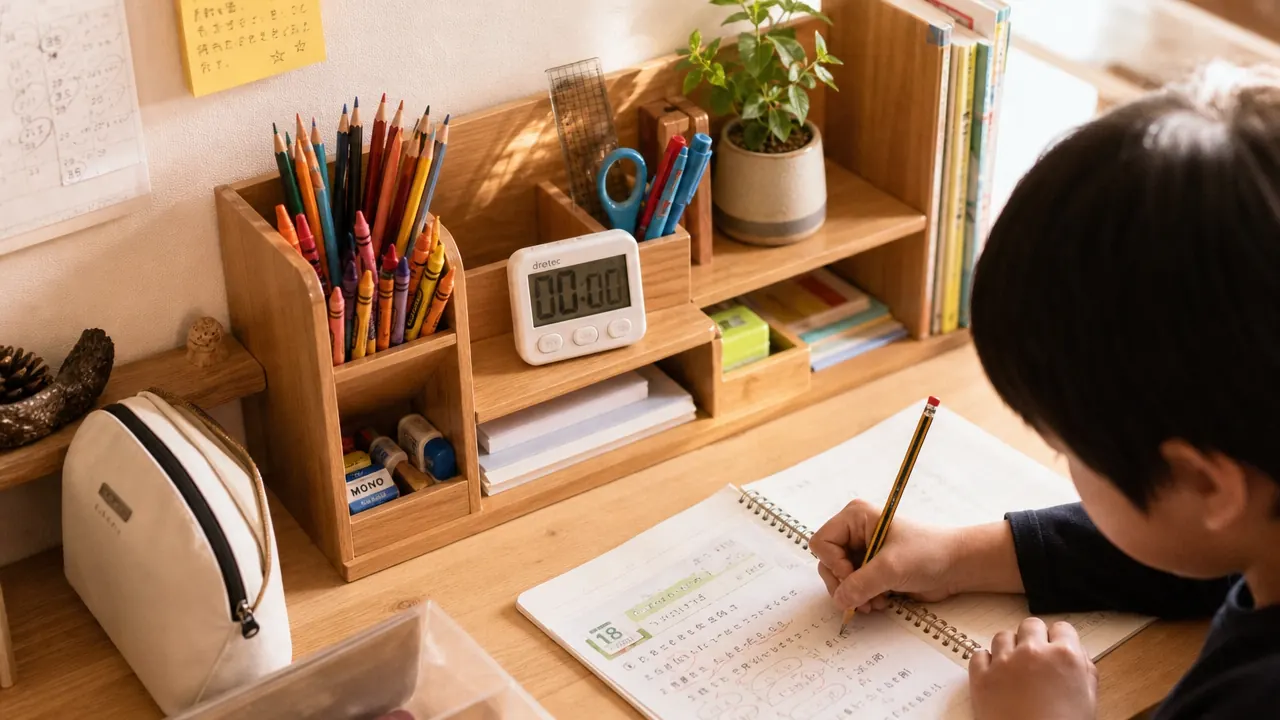
Every school night in September, I watched my daughter Maisie spend the first twelve minutes of homework time just hunting for a sharpened pencil. Not doing math. Hunting for a pencil. She is eight years old and would look under her backpack, behind her water bottle, inside her crayon box, and eventually show up at the kitchen counter holding a dried-out marker and a look of pure exasperation. I teach third grade. I know exactly what a disorganized supply situation does to a child's ability to focus. I just had not fixed it in my own house yet.
Once I finally set up a real home learning station for Maisie and my son Owen, who is six, that nightly scramble stopped. Homework got done faster. There were fewer meltdowns. And honestly, I stopped dreading 4 p.m. The system is not complicated. It takes about one afternoon to put together, and the anchor of the whole thing is a good desk organizer. I use the GAMENOTE Rainbow Wooden Desk Organizer at school and now at home too. It is made from real wood with no chemical smell, which matters when your kids are sitting right next to it for an hour every day. Here is exactly how to set it up.
Still losing pencils before the worksheet is even open?
The GAMENOTE Rainbow Wooden Desk Organizer gives every supply a permanent home. Natural wood, no plastic smell, multiple compartments sized for real kid supplies. Check what it runs today before the next homework hour.
Amazon Check Today's Price on Amazon →Step 1: Do a Full Supply Audit Before You Buy Anything
Before you organize anything, dump every school supply in the house onto the kitchen table and sort through it. I know that sounds messy, but it is the step most people skip and then regret. You will find three pairs of scissors when you thought you had none, and about forty dried-out markers from 2023. Get rid of everything that does not work. Toss the dried markers. Lose the broken crayons that are too small to hold. Recycle the pencil stubs.
Once you have only working supplies left, sort them into rough categories: drawing tools (pencils, crayons, colored pencils), writing tools (pens, markers), cutting tools (scissors, hole punch), and small accessories (eraser, sharpener, ruler, glue stick). You do not need to be fussy about the categories yet. You are just grouping so you can see the scale of what you are dealing with. Knowing what you have tells you how many compartments you need in an organizer, which prevents you from buying something too small and starting over.
In my classroom I do this exact audit at the start of every semester. Thirty minutes of sorting saves three months of frustration. At home it works the same way. Maisie actually loves doing this part because finding supplies she forgot she owned feels like a treasure hunt.
Step 2: Choose an Organizer That Fits the Desk, Not Just the Supplies
The most common mistake I see families make is buying a supply organizer based on how it looks in a photo, without thinking about the actual desk space their kid has. A sprawling six-tray plastic caddy might hold a lot of stuff, but if it takes up half the desk surface, the child has nowhere to put the paper they are writing on. Measure the desk before you shop.
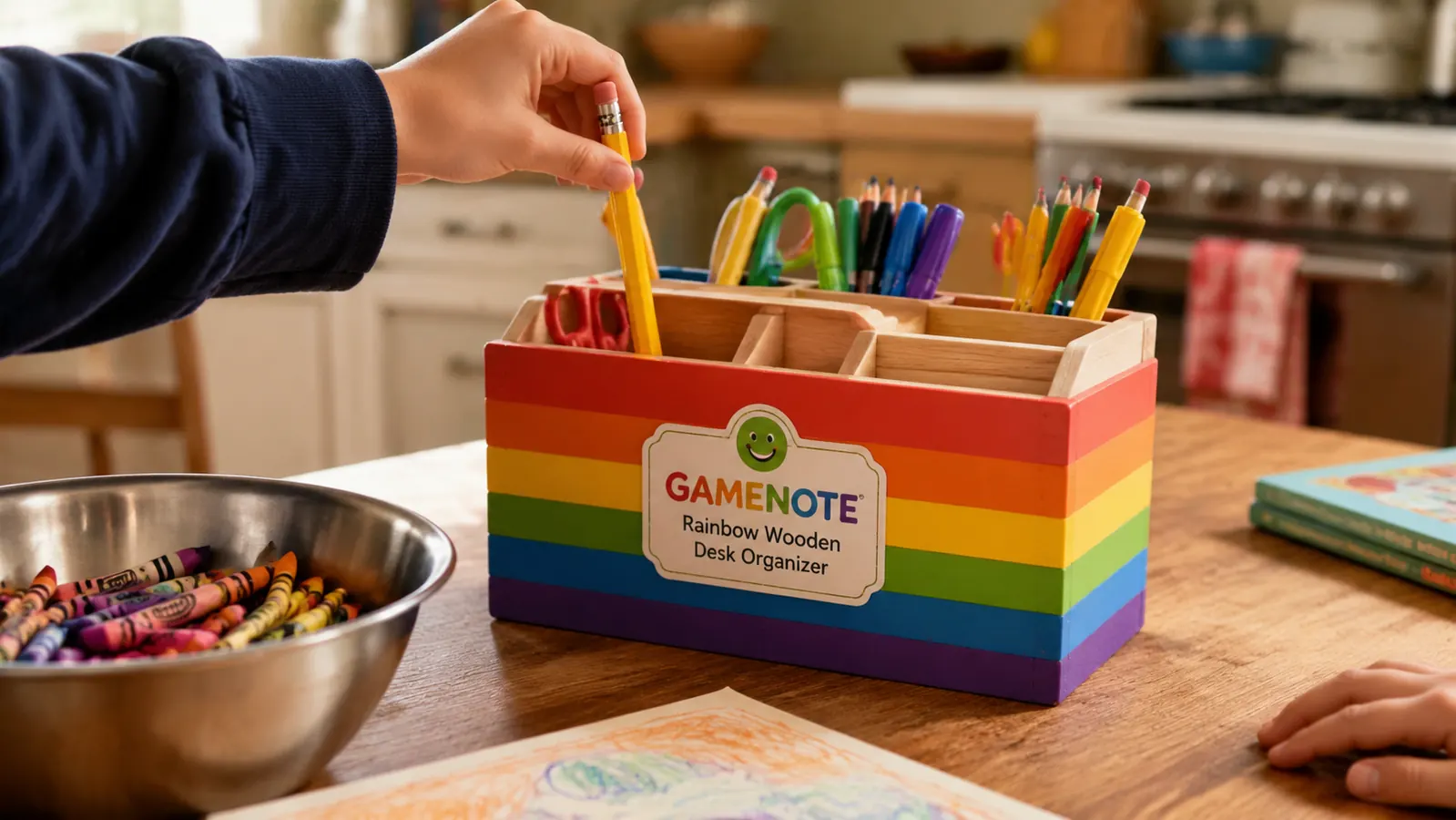
The GAMENOTE Rainbow Wooden Desk Organizer has a compact footprint that still gives you multiple compartments, which is why I keep coming back to it. It has a tall center section for rulers and long items, medium slots for pencils and markers, and small front pockets for erasers and sharpeners. It sits at the back edge of the desk without crowding the workspace. The rainbow color is genuinely cheerful without being distracting. Maisie calls it her pencil rainbow, and Owen has not once complained about sharing the design with his sister, which tells you something.
One practical detail worth mentioning: the wood has no chemical smell. When I first started stocking my classroom with wooden organizers, the main reason I switched from plastic was odor. A few plastic caddies off Amazon smell strongly of manufacturing chemicals in a warm room. GAMENOTE uses natural unfinished wood on the interior slots, and it smells the way a freshly sharpened pencil does. Kids sit next to this thing for an hour. Smell matters.
Step 3: Assign Every Supply a Permanent Slot
This is the step that actually makes the system work. It is not enough to have a nice organizer sitting on the desk if the child does not know which slot holds which supply. Pick one assignment and stick to it. I do not care if your pencils go in the left slot or the right slot, as long as they always go in the same slot every single time.
For younger kids, ages five to seven, I recommend labeling each slot with a small picture label, not just a word. Cut a small picture of a pencil and tape it to the front of the pencil slot. A picture of scissors goes on the scissors slot. This is exactly what we do in kindergarten and first grade classrooms, and it works because the child does not have to read to remember where things go. Owen, my six-year-old, can reset the organizer completely on his own because he matches pictures. Maisie, at eight, uses word labels and does the same thing.
Limit the organizer to the supplies your child uses at home for homework. Do not try to fit art supplies, craft materials, and holiday stickers all into the same organizer. Those belong in a separate bin. The desk organizer should hold only the things that come out during homework. Keeping the scope narrow is what makes the reset in Step 5 actually happen every night.
Step 4: Create a Simple Labeling and Refill System
Assigning slots is a one-time setup. Keeping them stocked is an ongoing job. The way you make that job invisible is to build a simple refill station somewhere nearby, and I mean nearby, not in the basement. I keep a small bin on the second shelf of the bookcase right next to our homework table. In it: a backup box of pencils, a fresh pack of erasers, and an extra glue stick. When the pencil slot runs low, Maisie grabs from the bin. When the bin runs low, she tells me and I restock it on the next Target run.
For labeling supplies as school property versus home property, we use colored tape. Maisie's school supplies at home get a stripe of blue tape near the top. Owen's get orange. This sounds fussy but it solves the single biggest argument in our house, which is whose scissors are whose. The blue tape takes about two minutes to apply to every item at the start of the school year and then you never have that argument again.

A homework desk is not a junk drawer. The second you let random items migrate in, the whole system collapses. Fifteen seconds of reset beats fifteen minutes of hunting.
Step 5: Build a Two-Minute Reset Routine into Bedtime
The system only stays organized if there is a routine attached to it. In my classroom, the last two minutes of every work period are what I call supply reset. Everyone puts things back before the next activity starts. I run the same routine at home. When Maisie finishes homework, before she closes her notebook, she spends ninety seconds putting every supply back in its slot. It is not optional. It is just what we do.
The key to making this stick with kids is speed and consistency, not rules. I do not lecture about organization. I just sit next to her during reset for the first two weeks, doing it alongside her, until it becomes automatic. After that she does it without being asked. Owen took a little longer, about three weeks, but he is six. Now he gets genuinely upset if something is out of place in the organizer because it does not match his picture labels.
The payoff is the next morning. Homework time starts with everything already in place. There is no hunting, no frustration, no dried-out marker drama. The desk is ready, and so is the child. That is the whole point of the system. It is not about being tidy for its own sake. It is about removing friction from learning.
What Else Helps
A good desk organizer handles the daily-use supplies, but a full home learning station needs a couple of other pieces. I keep a clipboard on the wall above the desk for the current week's homework assignments, so Maisie does not have to dig through her backpack to remember what she has due. A small desktop whiteboard is great for Owen, who likes to do quick number practice before getting into his workbook. And a dedicated backpack hook right next to the desk means the backpack never ends up in the middle of the floor blocking the chair.
The single most important element is still the organizer, because it is the thing that gets touched and reset every single day. If you invest in one piece of the system, make it a good organizer. Cheap plastic caddies tip over, smell bad in a warm room, and break when a kid knocks them off the desk, which happens. The GAMENOTE holds up to that kind of daily use and keeps looking good. I have had the same one in my classroom for a full school year and it looks the same as it did in September. That matters when you are asking a child to take it seriously.
If you want to read about how the GAMENOTE organizer held up over an extended period of real family use, my full review covers everything I noticed across a complete school year. And if you are weighing wooden organizers against plastic caddies and wondering whether wood is actually worth it, that comparison breaks down the differences honestly including where plastic still has a use.
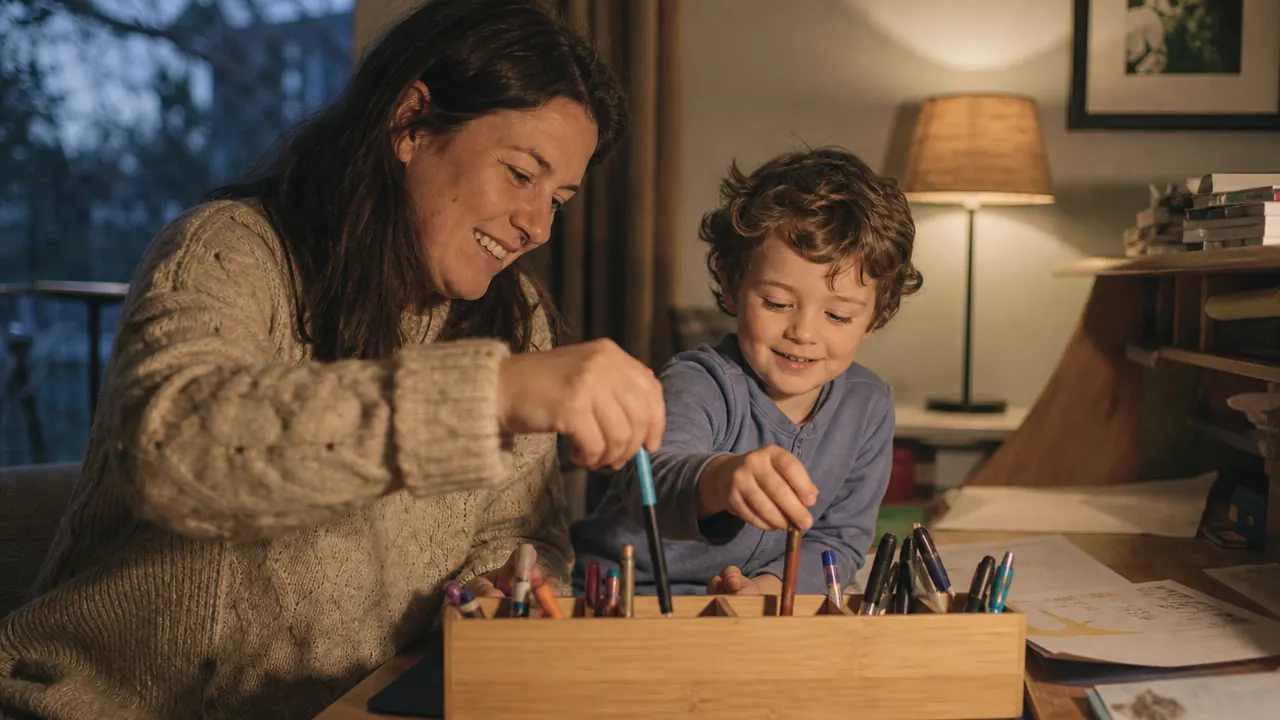
One desk organizer is the foundation the whole system builds on.
The GAMENOTE Rainbow Wooden Desk Organizer is the piece I use both in my classroom and at home. Natural wood, no chemical smell, compact footprint, and enough compartments to hold everything a kid needs for homework without crowding the desk. See today's price before the next homework hour.
Amazon Check Today's Price on Amazon →